




contact us



products
- Main Products
- IEC Test Probe
- UL Test Probe
- Material Flammability Tester
- IP Code Tester
- Impact Test Apparatus
- Security Testing Machine
- Lamp Cap Gauge Tester
- Lampholders Gauge Tester
- Plug & Socket Tester
- Electrical Safety Tester
- LED Test Instruments
- Environmental Test Equipment
- Instrument Accessories
- Weighing Sensor
- Others Testing Equipment
technical articles
Company News
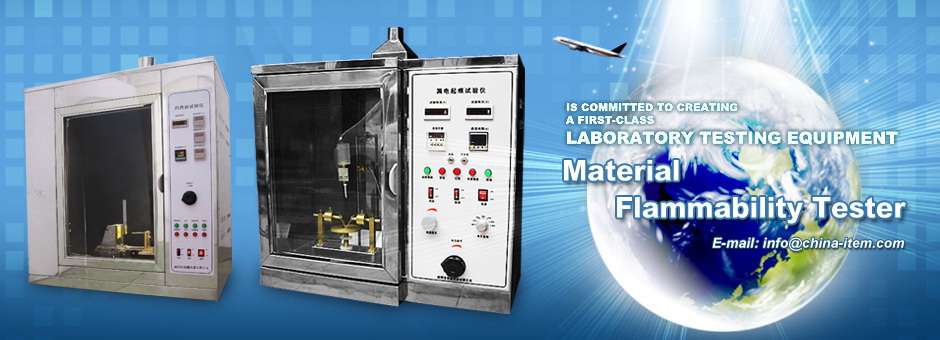
Glow-Wire Chamber Air Flow: The Quiet Variable That Moves the Result
The glow-wire test has a short list of controlled parameters: tip temperature, applied force, penetration depth, duration. Air flow is not on the list, because the standard assumes still air. That assumption is the one most often broken, and it changes the result in the direction of a pass.
A flame that is cooled by moving air goes out sooner, and the afterflame time is the number the test exists to measure.
What the standard assumes
| Parameter | Value | Sensitivity |
| Tip temperature | 550, 650, 750, 850 or 960 °C | Measured with a sheathed thermocouple before each test |
| Applied force | 0.8 N to 1.2 N, typically 1 N | Higher force penetrates further and transfers more heat |
| Penetration | 7 mm maximum | Excess penetration changes the contact area |
| Application time | 30 seconds | Fixed |
| Air movement | Still air, no draught | Not measured, and the most common deviation |
| Afterflame time | Recorded from removal of the tip | The verdict parameter |
| Chamber volume | Large enough that products do not touch | Small chambers heat up and change the burn |
The 30 seconds is fixed and easy to control. The aftermath is not: after the tip is withdrawn, the specimen either self-extinguishes within the allowed time or it does not, and that behaviour depends on how fast heat is carried away.
How air movement gets in
Three routes, all common. An extraction hood above the chamber pulls air through the test zone. A chamber door that does not seal lets a draught across the specimen. And a chamber placed next to an air conditioning outlet has a permanent 0.2 m/s current that nobody notices until the results become unrepeatable.
At 0.2 m/s the effect is small but real; at 1 m/s a dripping flame can be extinguished before it would otherwise have gone out, and the product passes a test it would fail in still air.
Checking the chamber
- Smoke test. Hold a smoking source in the test position with the extraction on and watch the plume. A vertical plume is acceptable; a plume that bends is a draught.
- Door seal. Close the door on a sheet of paper and pull. If the paper slides with no resistance, the seal is not sealing.
- Extraction timing. The extraction should run after the test, not during it. If it must run continuously, the flow has to be low enough not to affect the flame and the fact should be recorded.
- Chamber volume. A specimen that fills the chamber displaces the air and the oxygen available, and the result is no longer comparable with a standard test.
What to record so the result travels
Record the tip temperature before and after the test, the applied force, the penetration depth, the application time, the afterflame time and the afterglow time. Add the chamber model and whether extraction was running. That last line is the one that makes two reports comparable, and it is almost always missing.
If a result is borderline, repeat it in a second chamber before reporting. A difference of more than a few seconds between two chambers is a draught, not a material property. A glow wire test chamber with a sealed door and a separately controlled extraction is the configuration the standard assumes, and the site index lists the chambers by volume and temperature range.
Standards referenced: IEC 60695-2-10; IEC 60695-2-11.







